The Orient Express Returns to Britain: An Honest Account of the London to Venice Sleeper in 2026

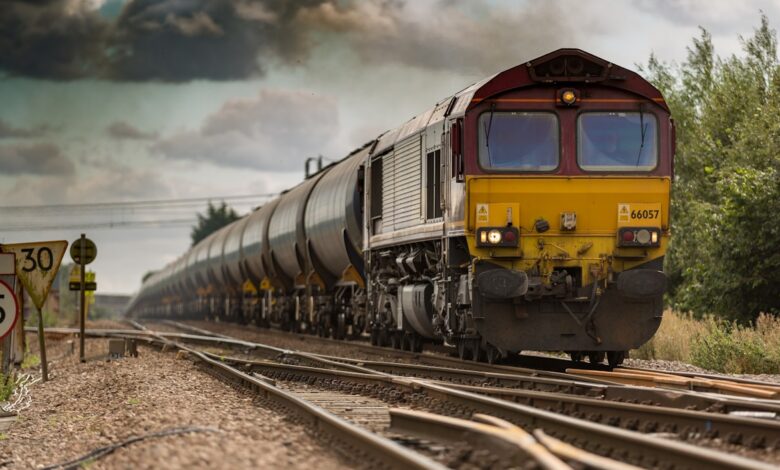
There is a particular quality of light at Victoria Station at seven in the morning that exists nowhere else. The great iron and glass roof holds the early light differently in winter — a diffuse, northern luminescence that falls on the platforms with a quality that Turner might have attempted and Whistler might have captured. On the morning of our departure, a Thursday in late November, this light fell on a train that seemed, improbably, to have arrived from a different century.
The Venice Simplon-Orient-Express — VSOE, as its staff refer to it, though never within earshot of passengers — is composed of original 1920s and 1930s Pullman cars, each individually named, each individually restored to a standard of craftsmanship that no modern railway carriage will ever approach. The Audrey, our car for the British leg to Folkestone, was built in 1932. Its marquetry panels — depicting hunting scenes in inlaid fruitwoods against a ground of birds-eye maple — had been restored in the mid-1990s and again, more recently, at a level of investment that the train’s owners, Belmond, declined to specify precisely but that the result makes obvious.
The British Pullman: London to the Channel
The journey begins not with a lurch but with a sigh — the almost imperceptible movement of a very heavy, very well-maintained train finding its rhythm on well-maintained track. The Pullman staff, in their navy uniforms with the VSOE livery, bring champagne before the train has cleared the suburban sprawl of South London. This is, we will learn, the rhythm of the experience: anticipation rewarded slightly before you have fully formed the anticipation.
Breakfast on the British Pullman is served at tables laid with Lalique crystal and Limoges porcelain. The menu runs to four courses if you want it — smoked salmon, devilled kidneys, the full English, kippers — and the coffee, served in individual silver pots, is better than the coffee in most London hotels. The journey to Folkestone takes approximately an hour and forty minutes. It feels considerably shorter.
At Folkestone, the transfer to the Continental cars involves a brief walk — perhaps two hundred metres — across a carefully managed platform area. The contrast between the British Pullman (cream and umber livery, slightly stately in proportion) and the Continental sleeping cars (dark blue with gold lettering, lower and more sinuous) is immediate and theatrical. This is, clearly, a different train for a different kind of journey.
Through the Tunnel and Into France
The Channel Tunnel section is, by design, managed as an interlude rather than an experience. The lights dim slightly as the train descends. A brief announcement in English and French. Twenty-two minutes of darkness. And then, with a quality of light that is immediately, unmistakably different from the English morning, northern France.
The transition from the Tunnel’s darkness to the flat agricultural landscape of the Pas-de-Calais has an almost operatic quality: the curtain rising, the stage revealed. The sky is lower here, the light less luminous than the English morning we departed from. But the countryside unfolds with a pace and gentleness that no other form of travel provides — not the fractured glimpses of a motorway, not the aerial abstraction of a flight path, but the full, continuous scroll of a landscape moving past at a speed slow enough to read.
Lunch is served as the train crosses northern France. The menu — three courses, with a wine list that includes several bottles that would embarrass many London restaurants — has been designed with the particular demands of train dining in mind: dishes that are flavourful without being heavy, that reward leisurely consumption without suffering from the delays inevitable in a moving kitchen. The Dover sole is exceptional. The cheese trolley, navigated with evident expertise by a steward who has clearly made this journey hundreds of times, features a selection of French regional cheeses in conditions that suggest they have been travelling in considerably more comfort than most cheese in transit.
The Night: Paris to the Alps
The train pauses at Paris Est in the early evening — not long enough to disembark meaningfully, but long enough to watch the city’s eastern suburbs give way to the illuminated grandeur of one of the world’s great railway stations, and to feel the particular emotional weight of a journey whose geography is finally, properly, European.
The sleeping compartment — ours was in the Côte d’Azur car, built in 1929 — is smaller than most hotel rooms and larger than any rational analysis of railway carriage dimensions should permit. The beds fold down from the wall with a precision that reflects decades of refinement. The Art Deco lamp casts a warm light that the marquetry panels receive with obvious approval. The sounds of the train — the rhythmic percussion of joints in the track, the gentle sway that becomes, within minutes, a soporific, — fill the compartment with a quality of background noise that is, despite all rational expectations, almost perfectly conducive to sleep.
I woke somewhere in Switzerland — the GPS on my phone confirmed it, though the darkness outside was uniform — to the sound of the train decelerating for a station I never identified. The station lights, glimpsed for perhaps thirty seconds through the blinds I had not fully closed, illuminated a platform of extraordinary cleanliness and an illuminated clock showing 3:47. I was asleep again before the train had fully stopped.
Morning in the Alps
The Alps arrive at dawn. If you are sleeping as deeply as the train’s rhythms encourage, you may miss the first reveal — the appearance, in a sky that has been uniformly dark, of shapes that are darker still and enormously, impossibly tall. But the transition to full Alpine light, which happens somewhere between Innsbruck and the Brenner Pass, is sufficiently dramatic to wake the most determined sleeper.
The mountains here are not the soft-edged hills of the French Alps further west. They are the central Alps — vertical, geological, indifferent to any human scale of reference. The train threads valleys between them with a confidence that reflects more than a century of engineering. At the Brenner Pass, the border between Austria and Italy, the light changes for the third time in the journey: warmer, more golden, the particular quality of Italian morning light that has been drawing northern Europeans south for millennia.
Breakfast in the restaurant car is served somewhere in the Dolomites. The view — vertiginous valleys, distant snow, the occasional ochre village clinging to a south-facing slope — is of a quality that makes the scrambled eggs, already excellent, almost irrelevant as a sensory experience.
Venice
The approach to Venice by train is one of the great arrivals in travel. The causeway across the lagoon — four kilometres of bridge connecting the mainland to an island that has, for a thousand years, existed in magnificent improbability — frames the city in the distance as the train approaches, and then, with a suddenness that no amount of prior knowledge fully prepares you for, you are on it: water on both sides, the city resolving itself from abstraction into specific detail, the domes and campaniles and the peculiar flat light of the lagoon filling the windows with an image that has the slightly unreal quality of something you have seen in paintings for your whole life.
Santa Lucia station receives the Orient Express with the quiet ceremony it has received such trains for most of its history. The disembarkation is unhurried. A porter manages your luggage. A Belmond representative waits with a list of guests and the gondola or water taxi arrangements that have been made for each of them.
We stepped off the train at 11:47 on a Friday morning, twenty-eight and a half hours after boarding at Victoria. We had crossed six countries and approximately 1,300 kilometres. We had eaten four meals of genuine quality. We had slept deeply and woken to the Alps. We had drunk champagne at breakfast and Barolo at lunch and a glass of Amarone as the Italian border approached.
We had, in other words, travelled in the most literal sense of the word: not merely relocated from one place to another, but undergone a journey that was itself the point — an experience complete in its own terms, independent of the destination that awaited us. This is what the Orient Express offers that no other form of travel can replicate. It is, properly understood, not transportation. It is one of the great slow pleasures that the modern world, in its enthusiasm for efficiency, has largely forgotten how to provide.
Practical Information
The Venice Simplon-Orient-Express operates on the London–Venice route on selected dates between April and November. Cabin categories range from double cabins (the standard option, and our recommendation for first-time travellers) to the historic Grand Suites — opulently restored original compartments that offer the most immersive Art Deco sleeping experience available anywhere in modern travel. Pricing reflects the singular nature of the product; enquire through Belmond directly or through a specialist travel adviser who understands the booking nuances. For the autumn season, reservations open in January of the preceding year and the most sought-after departures and cabin categories sell within hours of availability opening.